As an Amazon Associate, we earn from qualifying purchases. Some links on this site are affiliate links at no extra cost to you. Our recommendations are based on thorough research and editorial judgment.


Hiking Boots vs. Hiking Shoes: When Extra Support Is Necessary

Hiking boots provide up to 30% greater ankle support and protection, making them necessary for rugged terrain, uneven surfaces, and individuals with prior ankle injuries. They weigh 1–2 pounds more, increasing energy use by 10%, but offer durability of around 800 miles. Hiking shoes prioritize flexibility, lighter weight, and agility, suitable for easier trails and moderate conditions. Proper footwear selection depends on terrain difficulty, personal stability needs, and climate; further details explain comfort, protection, and seasonal usage considerations.
Key Takeaways
- Extra ankle support from hiking boots is necessary on rugged terrain or for individuals with past ankle injuries to reduce injury risks.
- Hiking boots provide enhanced stability and protection, crucial for uneven trails or when carrying heavy backpacks.
- Choose hiking boots for cold, wet, or muddy conditions due to their waterproofing and debris resistance.
- Hiking shoes suffice for shorter, easier hikes where flexibility and lighter weight are preferred over maximum support.
- Personal history of balance issues or previous foot injuries dictates opting for boots to prevent re-injury during challenging hikes.
The Importance of Proper Hiking Footwear
You may be interested


Because improper hiking footwear increases the risk of foot injuries, selecting the right shoes is essential. Hiking footwear must fit the trail conditions to prevent discomfort and inefficiency. Old or unsuitable shoes can cause blisters and fatigue, reducing overall hiking performance. Hiking boots feature higher tops and thicker uppers, offering enhanced protection on rough terrain. In contrast, hiking shoes are lighter and boost agility on well-maintained paths but provide less protection. Specialized hiking footwear, such as waterproof boots for winter or breathable shoes for warmer climates, improves safety and comfort. Studies show appropriate footwear reduces blister incidence by up to 30% and fatigue by 20%. Additionally, narrow width options are important for ensuring a better fit and reducing fatigue on long hikes. Thus, investing in hiking footwear tailored to your hiking environment directly influences injury prevention and performance.
Comparing Ankle Support in Boots and Shoes

Although both hiking boots and hiking shoes serve to protect the feet, their levels of ankle support differ considerably, impacting stability and injury risk. Hiking boots feature higher tops and a sturdier construction, offering enhanced ankle support that can reduce the risk of ankle rolling by up to 30% during rugged hikes. Hiking shoes, being lighter and more flexible, typically provide less ankle stability, which may not suffice on uneven or advanced trails. Individuals with previous ankle injuries or hypermobility often benefit from the added rigidity that hiking boots provide. When choosing between them, consider terrain difficulty, hiking style, and personal comfort. Hiking boots excel in challenging conditions where extra stability is necessary, while hiking shoes suit easier, well-maintained paths that demand agility over support. Additionally, hiking boots designed with firm arch support and cushioning materials greatly enhance comfort and reduce foot pain for those with high arches.
Assessing Foot Protection Features

Hiking boots frequently provide superior foot protection compared to hiking shoes due to their higher tops and thicker, tougher uppers. These boots feature rugged construction that shields your feet against sharp rocks and thorny vegetation, reducing the risk of cuts and abrasions. High-cut hiking boots also prevent debris like dirt and small stones from entering, which is especially important on uneven or rocky trails. Their design offers enhanced resistance in wet or muddy conditions, maintaining foot dryness and stability. In contrast, hiking shoes prioritize flexibility and lightweight design but lack the same protective barriers. When traversing snake-prone areas or rough terrain, you should consider hiking boots for their reinforced ankle collars and durable materials, which provide greater defense from environmental hazards and physical impact. Additionally, hiking boots often incorporate waterproof materials such as suede or full-grain leather to enhance comfort and durability in harsh environments.
Impact of Footwear Weight on Performance

Weighing 1 to 2 pounds more per pair than typical hiking shoes, boots increase the load on your legs and feet. This extra weight results from heavier materials and a sturdier design intended for support and protection. Hiking boots offer greater stability on rugged trails but demand more energy, causing fatigue during extended hikes. If hiking speed and agility are priorities on well-maintained paths, lighter footwear like trail runners improves efficiency and movement fluidity. Because heavier boots elevate energy expenditure by up to 10%, they can reduce endurance over long distances. When choosing between hiking boots and shoes, consider the terrain difficulty and weigh the need for support against the physical cost of carrying additional weight, which directly affects comfort and overall hiking performance. Many high-quality hiking boots use premium full-grain leather to balance durability and comfort, helping mitigate some drawbacks of added weight.
Breathability and Waterproofing Considerations
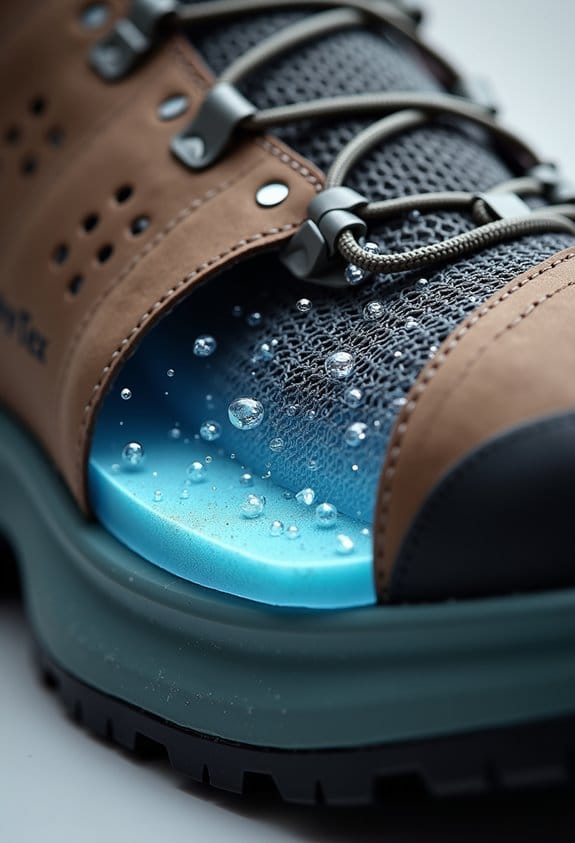
The additional weight of heavier hiking boots affects not only energy expenditure but also moisture management inside the footwear. Breathability plays an essential role in keeping feet dry and comfortable during hikes, especially in warm or wet conditions. Hiking shoes with breathable uppers allow moisture to escape quickly, reducing blister risk. Waterproof boots, while protecting against water intrusion, often lack adequate ventilation, causing feet to sweat and retain moisture. On trails like the Pacific Crest Trail (PCT) and Appalachian Trail (AT), many hikers prefer breathable shoes for faster drying times and lighter weight. Water-resistant materials offer some moisture control but usually reduce breathability and comfort during long hikes. Waterproof options are more suitable for winter hiking, where insulation from snow and cold water outweighs ventilation needs. Additionally, boots featuring Gore-Tex membranes provide a balance between waterproofing and breathability for various hiking conditions.
The Role of Terrain in Footwear Choice
Several factors related to terrain influence the choice between hiking boots and hiking shoes. Rugged and unstable paths often require hiking boots because they provide extra ankle support and protection from uneven surfaces. Well-maintained trails, by contrast, favor hiking shoes for their lightweight design and agility, especially over shorter distances under five miles. In environments with dense vegetation or sharp debris, hiking boots help protect against cuts and scrapes. Additionally, areas known for snakes make boots essential for preventing bites due to their higher coverage. Wet or muddy terrain demands footwear with good traction and water resistance, conditions where hiking boots outperform shoes by keeping feet drier and reducing slipping risks. Therefore, understanding terrain characteristics is critical to selecting footwear that balances safety, comfort, and functionality. Choosing boots with a waterproof membrane is especially important to keep feet dry and comfortable in such conditions.
Weather and Climate Influences on Footwear Selection
When choosing hiking footwear, consider how weather and climate conditions directly impact comfort, safety, and performance. Hiking boots provide essential insulation in cold conditions, maintaining warmth during winter hikes. They often feature waterproof membranes that block water penetration, useful in rainy or snowy environments where wet terrain demands dryness and stability. High-top hiking boots or waterproof hybrids enhance ankle support and prevent water ingress, crucial in muddy or slippery areas. Conversely, in hot and dry climates, hiking shoes offer superior breathability, allowing heat and moisture evaporation to reduce overheating risks. Because hiking boots tend to be heavier and less ventilated, shoes may be preferable when temperatures exceed 25°C (77°F). Therefore, selecting between hiking boots and shoes hinges greatly on climate factors such as temperature, precipitation, and humidity, which directly influence foot protection and performance. Additionally, features like waterproof membranes and cushioned midsoles play a key role in providing comfort and stability across varying trail conditions.
Comfort Factors: Fit, Cushioning, and Socks
Comfort in hiking footwear depends strongly on fit, cushioning, and the socks worn. Proper fit is essential; shoes that are too tight cause blisters, while loose ones reduce stability and increase discomfort. Cushioning absorbs shocks from uneven surfaces, reducing foot fatigue over long distances. Use seamless hiking socks made from wool or synthetic blends to manage moisture and prevent blisters effectively. Socks should provide extra cushioning in areas under pressure, like heels and balls of feet, while maintaining breathability to keep feet dry. Additionally, higher-cut hiking boots offer ankle support, improving stability on rocky terrain, which contributes to overall comfort by preventing roll injuries. Each of these factors—fit, cushioning, and sock choice—significantly impacts your hiking experience and injury prevention. Selecting boots with padded collars and comfort-focused designs further enhances all-day wearability and foot protection.
Durability and Lifespan of Hiking Boots and Shoes
Durability is a critical factor when selecting between hiking boots and hiking shoes, especially for frequent or long-distance hikers. Hiking boots commonly last around 800 miles due to their robust construction, which includes thicker leather and rubber components. These materials improve resilience, particularly in rugged or off-trail environments where abrasion and impact are frequent. Hiking shoes, designed for lighter trails, generally have a lifespan of about 500 miles because they use lighter, less durable materials. Waterproof hiking boots can extend durability in wet conditions, but if they are not properly dried and maintained, their lifespan may decrease considerably. Choosing hiking boots over shoes affects durability, as boots withstand aggressive terrain better, whereas shoes are optimized for well-maintained paths, limiting wear and tear in less demanding situations. Additionally, the presence of seam-sealed construction in hiking boots greatly enhances their waterproofing and overall durability.
Hiking Footwear Options for Different Seasons
How does seasonality influence the selection of hiking footwear? In winter, waterproof hybrids are advisable because they offer insulation and snow resistance, critical for cold, wet environments. Spring and autumn favor hiking shoes, which balance comfort and breathability, managing moisture effectively in moderate temperatures. Hiking boots remain preferable for fall excursions on rugged trails, as they provide superior ankle support and stability against uneven terrain. During summer, trail runners dominate for their lightweight design and comfort, enhancing endurance on long hikes. Additionally, breathable shoes suit long-distance routes like the Pacific Crest Trail (PCT) or Appalachian Trail (AT) in summer, reducing perspiration buildup and drying quickly after wet conditions. Selecting appropriate hiking boots or shoes based on season helps maintain foot health and improves overall hiking performance. It is also important to consider the impact of hiking boots on ankle injuries to prevent slips and ensure stability throughout the hike.
Personal Preferences and Experience in Footwear Decisions
Although hiking footwear selection is influenced by many factors, personal preferences and prior experiences play a critical role in the decision-making process. Some hikers choose lighter hiking shoes for agility and speed, while others prioritize hiking boots for ankle support and protection. If you have a history of ankle injuries, hiking boots offer better stability to reduce re-injury risk across uneven terrain. Comfort is also key; those used to tennis shoes might find hiking shoes more familiar but may require boots on challenging trails. Your hike type influences choice: day hikes on firm paths often allow lighter shoes, whereas backpacking on rugged routes demands hiking boots for durability. People with balance issues or hypermobility typically benefit from the firm structure hiking boots provide, as user reports consistently confirm enhanced stability.
Frequently Asked Questions
When to Use Hiking Shoes vs. Hiking Boots?
Hiking shoes suit easy trails with lighter weight and flexibility. Hiking boots are preferred on rugged terrain for enhanced traction factors, ankle support, and protection, especially in colder conditions or when extra durability is necessary for challenging hikes.
Are Hiking Boots Supposed to Have Arch Support?
Like a bridge reinforced for heavy loads, hiking boots are indeed designed with arch support to sustain foot alignment and reduce fatigue. Proper arch support prevents injuries, enhancing comfort and stability on rugged terrains.
Can I Use Boots as Hiking Shoes?
Boot versatility allows boots to be used as hiking shoes, offering enhanced protection and ankle support. However, their increased weight and reduced flexibility may affect comfort and agility on less challenging trails or in warmer conditions.
Are Hiking Shoes Supportive?
Hiking shoes offer moderate support but generally less ankle stability compared to boots. Their shoe durability suits less rugged trails, providing flexibility and comfort, yet they may not adequately support users requiring substantial protection on challenging terrain.