As an Amazon Associate, we earn from qualifying purchases. Some links on this site are affiliate links at no extra cost to you. Our recommendations are based on thorough research and editorial judgment.


Transitioning Safely From Cushioned Trainers to More Aggressive Sprint Shoes

Shifting from cushioned trainers to sprint shoes requires a gradual four-week period, beginning with short runs of 2-3 kilometers at 5-10% of total training mileage to reduce injury risk. Sprint shoes have lower heel-to-toe drops (4-6 mm) and minimal cushioning, which shifts muscle engagement to the calves and increases Achilles tendon load. Rotating between both shoe types during this phase helps muscles adapt while monitoring fatigue symptoms prevents overuse injuries. Continued guidance covers strengthening and footwear strategies for safe shifting.
Key Takeaways
- Gradually transition over at least four weeks, rotating sprint shoes with cushioned trainers and starting with short distances (2-3 km).
- Begin sprint shoe usage at 5-10% of total training mileage, focusing on speed sessions rather than long or recovery runs.
- Monitor for persistent fatigue or pain; reduce training volume if symptoms worsen or persist beyond two weeks.
- Expect increased calf engagement due to lower heel-to-toe drop; allow muscles time to adapt to avoid Achilles tendon and shin injuries.
- Ensure proper fit and traction features like TPU spike plates, and consider diverse footwear rotation to reduce repetitive strain and injury risk.
Understanding the Differences Between Cushioned Trainers and Sprint Shoes
You may be interested

10 Best Carbon Fiber Sprint Shoes for Explosive Speed in 2026
February 26, 2026

10 Best Sprint Shoes for Explosive Power and Speed in 2026
February 26, 2026
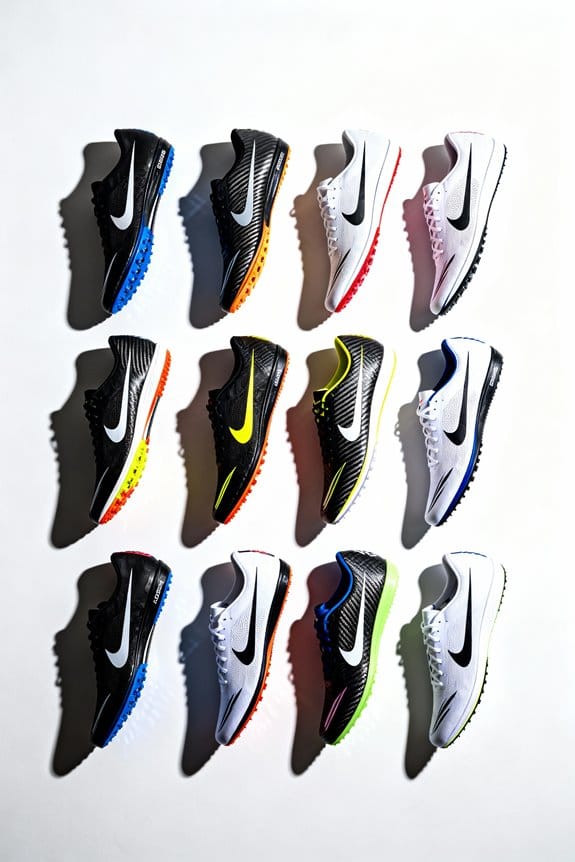
The key distinction between cushioned trainers and sprint shoes lies in their design purpose and structural components. Cushioned shoes provide extensive midsole padding that enhances shock absorption and comfort for long-distance running, featuring a typically higher heel-to-toe drop, often ranging from 8 to 12 millimeters, which promotes an upright posture. Sprint shoes, in contrast, use minimal cushioning to maximize ground feel and responsiveness, with a lower heel-to-toe drop, usually around 4 to 6 millimeters, encouraging a forward-leaning running style that enhances propulsion. Sprint shoes also use lightweight materials and stiff rubber outsoles with spikes for grip, differing from cushioned shoes’ heavier, more flexible soles designed for durability and diverse terrain. This structural variance influences biomechanics, so abruptly switching can increase injury risk due to altered muscle engagement and load distribution. Additionally, the spike configuration in sprint shoes plays a crucial role in providing the specialized traction necessary for explosive starts and rapid acceleration.
The Importance of Gradual Transition in Footwear Changes
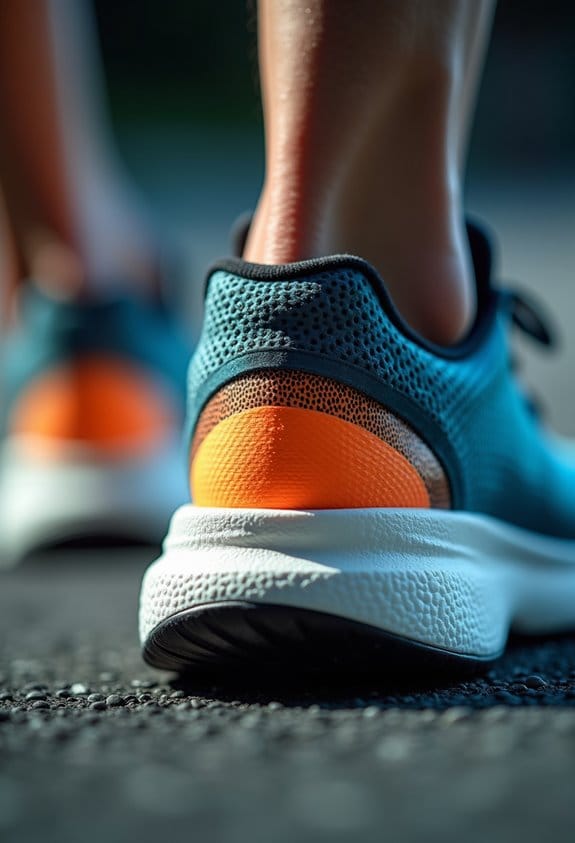
When shifting from cushioned trainers to aggressive sprint shoes, gradual adaptation over a minimum of four weeks is essential to avoid injuries like calf strains and Achilles tendonitis. Runners should rotate between cushioned trainers and sprint shoes during the changeover, progressively increasing sprint shoe use while monitoring body responses. Starting with shorter distances, such as 2-3 kilometers, allows muscles to adapt to the reduced cushioning and altered foot placement. Ignoring this gradual process increases the risk of injury due to abrupt changes in muscle engagement and support. Persistent pain during changeover signals a need to reassess the plan. A controlled transition period helps runners acclimate safely, minimizing overuse injuries associated with sudden footwear changes and ensuring long-term performance benefits in sprint shoes. Incorporating sprint shoes with cushioned midsoles can help ease the transition by providing additional shock absorption during the adaptation phase.
How Heel to Toe Drop Affects Your Running Form

Footwear changes affect more than cushioning and support; variations in heel to toe drop influence running mechanics considerably. Heel to toe drop measures the height difference between heel and forefoot. Lower drop shoes, often between 0-4 mm, encourage a midfoot or forefoot strike, increasing calf muscle engagement and reducing impact forces. Minimalist shoes typically have very low or zero drop, promoting natural foot motion but requiring adaptation. Higher drop shoes, with 8-12 mm differences, favor heel striking, cushioning the foot but potentially increasing strain on knees and hips. Shifting to lower drop shoes alters load distribution, potentially mitigating injuries like Achilles tendonitis if adjusted properly. Understanding heel to toe drop helps customize footwear choices to match biomechanics and injury history, optimizing performance while minimizing risk. Additionally, shoes with zero drop design promote natural foot alignment by eliminating height differences between heel and toe, enhancing proprioception and ground feel.
Risks Associated With Sudden Changes in Shoe Drop

Why must shifts between shoe drops be managed cautiously? Sudden changes to lower drop shoes increase the risks of injuries, especially to the Achilles tendon and calf muscles. Rapidly switching from cushioned trainers with high drop heights to aggressive sprint shoes with drops often below 4mm causes biomechanical changes, which frequently result in knee pain or shin splints. The Achilles tendon experiences excessive strain, making tendonitis and strains more likely. If you make sudden changes without conditioning, previously unused foot muscles fatigue quickly, leading to discomfort. Studies recommend a minimum four-week adaptation period to allow muscles and tendons to strengthen gradually. Avoid abrupt changes, as rotating old cushioned trainers with new sprint shoes helps ease the process. Managing these risks reduces injury likelihood and supports safer performance changes. Choosing running shoes with proper stability control features can also help maintain foot alignment and reduce injury risks during transitions.
Best Practices for Incorporating Sprint Shoes Into Training
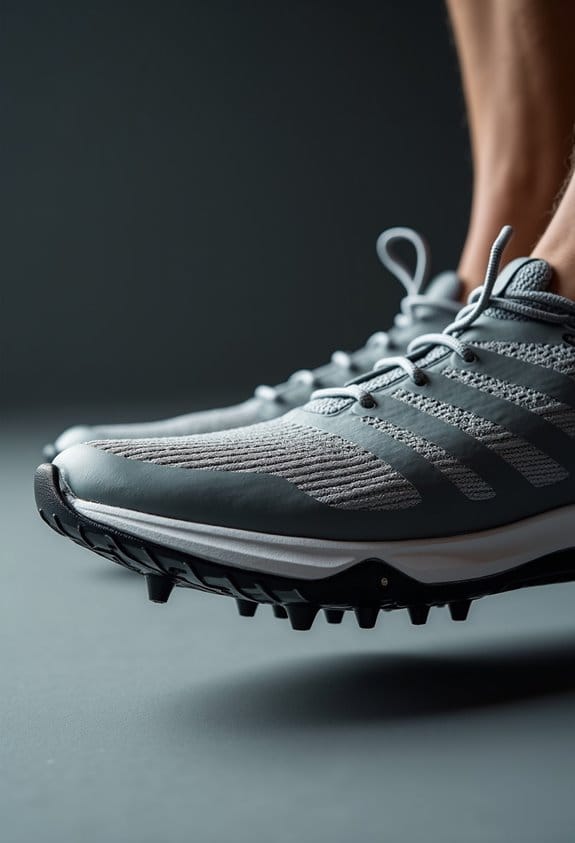
Although sprint shoes enhance speed and agility, integrating them into your training requires careful management to avoid injury. Begin shifting by using sprint shoes for short distances, about 5-10% of total training mileage, allowing your feet and muscles to adapt gradually. Limit sprint shoes to dedicated speed sessions, avoiding long runs or recovery runs, because their aggressive design lacks cushioning. Implement a rotation schedule between cushioned trainers and sprint shoes for several weeks to balance muscle load. Monitoring foot strength is critical, as sprint shoes demand different muscle engagement, affecting foot and calf muscles. Conduct a controlled trial during initial sessions to detect discomfort or injury early. Persistent pain signals the need to slow progression, ensuring the body safely adapts to sprint shoe demands while mitigating injury risk. Additionally, paying attention to the spike plate technology in sprint shoes is essential for maintaining optimal traction and reducing slipping during high-intensity workouts.
Strengthening Exercises to Support Foot and Leg Adaptation
Several targeted exercises can enhance the strength and flexibility required for effective adaptation to aggressive sprint shoes. Strengthening exercises like calf raises target the gastrocnemius and soleus muscles, reducing calf strains by increasing muscular endurance and load capacity by up to 20%. Toe stretches and towel curls improve foot biomechanics by enhancing intrinsic foot muscle strength and flexibility, which support better grip and propulsion during sprints. Using resistance bands for lateral leg lifts strengthens the gluteus medius, promoting leg stability and proper alignment. Plyometric exercises such as jump squats develop explosive power while conditioning your legs for increased sprinting demands. Gradually increasing exercise intensity and volume over a four-week period allows joints and muscles to adapt safely, minimizing injury risk during the shift to more aggressive footwear. Additionally, choosing sprint shoes with a low midsole offset can enhance stability and facilitate a smoother transition during training.
Monitoring Your Body’s Response During Transition
Adapting to aggressive sprint shoes requires careful attention to how your body reacts during training. Monitoring the lower leg muscles, including the calves and Achilles tendon, is essential to detect early signs of strain or discomfort. Begin the shift by running shorter distances, such as 1-2 kilometers, in the new running shoes while increasing mileage by no more than 10% weekly. Keep a detailed training log to track pain levels, soreness, and performance changes to identify patterns linked to the shoe shift. Regularly assess foot and lower leg comfort through self-exams, noting any sharp pain or persistent fatigue. If symptoms worsen or fail to improve within two weeks, consider adjusting the training volume to prevent overuse injuries during this critical shift phase. Additionally, understanding the impact of effective midsole cushioning can help manage fatigue and reduce injury risk during the transition.
Rotating Shoes to Minimize Injury Risk
Multiple shoe rotations can greatly lower injury risk by varying the biomechanical stresses placed on your feet and legs during training. Rotating shoes to minimize injury risk involves using stability running shoes, maximalist, neutral, and minimalist models alternately. Different running shoes decrease repetitive strain by shifting pressure points and muscle engagement, which helps avoid overuse injuries. Research shows runners adapting with a rotation strategy experience a 39% reduction in injury rates compared to those using one shoe type exclusively. Incorporating stability running shoes during easier runs and sprint shoes for speed work allows tailored support. This variation also promotes recovery by balancing cushioning and ground feel. Runners adjusting should alternate shoes gradually, ensuring the body adapts and minimizing the chance of injury from sudden biomechanical changes or improper support. Trail running shoes with deep and aggressive lugs enhance traction and stability, making them a beneficial option for varied terrain in rotation to reduce injury risk.
Optimizing Sprint Performance With Proper Footwear
Proper footwear plays a significant role in optimizing sprint performance by influencing biomechanics and energy return. Shifting from cushioned running shoes to aggressive sprint shoes involves adjusting to lower heel-to-toe drops that promote efficient running form and better ground contact. These sprint shoes use lightweight materials and minimal shock absorption cushioning, reducing weight and allowing higher speed without interference. Specialized rubber outsoles provide improved traction, aiding acceleration and stability during sprints. Easing into shorter sprint intervals lets muscles and tendons adapt, minimizing injury risk. Monitoring performance and comfort is essential because improper fit or abrupt changes can cause issues like plantar fasciitis or Achilles tendonitis. Proper footwear selection and gradual shifting maximize sprint performance while reducing biomechanical strain. Features like a TPU spike plate in sprint shoes enhance traction and stability, which are crucial for explosive starts and maintaining speed.
Frequently Asked Questions
Is Too Much Cushioning in Running Shoes Bad?
Too much cushioning, like a double-edged sword, can undermine running form and injury prevention. While cushioning benefits comfort, excessive padding disrupts shoe selection balance, potentially increasing loading rates and stressing tendons, ultimately heightening injury risk.
How to Transition Running Shoes?
Changing running shoes involves shoe types comparison, foot strike analysis, and training schedule adjustments. Gradual integration with injury prevention tips minimizes risk. Monitoring form and comfort guarantees adaptation, supporting a safer change between shoe types.
Who Should Not Wear a Stability Shoe?
Approximately 30% of runners with normal to high arches should avoid stability shoes, as improper shoe fit can increase injury risk. Those with minimal foot pronation or low training intensity benefit more from neutral footwear for maximal comfort.
Why Is It so Hard to Run With Cushioned Shoes?
Running with cushioned shoes is hard because excessive cushioning alters foot strike and weakens intrinsic muscle strength, disrupting natural running form. This reliance increases injury risk by preventing proper biomechanical adaptations essential for efficient, safe running.


