As an Amazon Associate, we earn from qualifying purchases. Some links on this site are affiliate links at no extra cost to you. Our recommendations are based on thorough research and editorial judgment.


Essential Trail Shoe Features for Beginner Trail Runners

Essential trail shoes for beginner runners include thick cushioning and midsoles that absorb up to 30% of shock to reduce joint stress. Reinforced toe caps protect against rocks, while structured ankle collars aid stability. Outsoles feature defined lug patterns—widely spaced for mud and smaller for rocky surfaces—to optimize grip. Lightweight designs between 250-350 grams promote speed without sacrificing support. Breathable, waterproof materials balance comfort and dryness, while a snug fit prevents injury. Further details clarify how features adapt to varied terrains and runner needs.
Key Takeaways
- Cushioning with shock absorption protects joints and reduces injury risk on uneven trails.
- Traction with widely spaced, deep lugs prevents mud buildup and improves grip on varied terrain.
- Lightweight materials enhance speed, reduce fatigue, and support natural foot movement during trail runs.
- Proper fit with a snug toe box and stability features minimizes foot movement and injury risk.
- Waterproof yet breathable membranes keep feet dry while allowing sweat vapor to escape for comfort.
Importance of Cushioning and Shock Absorption
You may be interested


Because trail running involves uneven and rugged terrain, the importance of cushioning and shock absorption in trail shoes cannot be overstated. Trail shoes feature thicker, shock-absorbent soles designed to protect joints and reduce injury risks by absorbing high-impact forces from rough surfaces. Cushioning technology differs among models, with some incorporating advanced foams providing responsive support while maintaining a lightweight feel. Effective shock absorption not only reduces fatigue but also increases comfort during long runs by minimizing muscle and tendon strain, which is vital for beginners developing stamina. A well-cushioned shoe enhances stability and confidence on rocky trails, making it easier to navigate irregular surfaces. This functional design element contributes to improved endurance and a more efficient stride, especially when traversing complex outdoor environments. Many trail shoes combine this cushioning with lightweight midsoles to maintain agility without sacrificing protection.
Foot and Ankle Protection Features
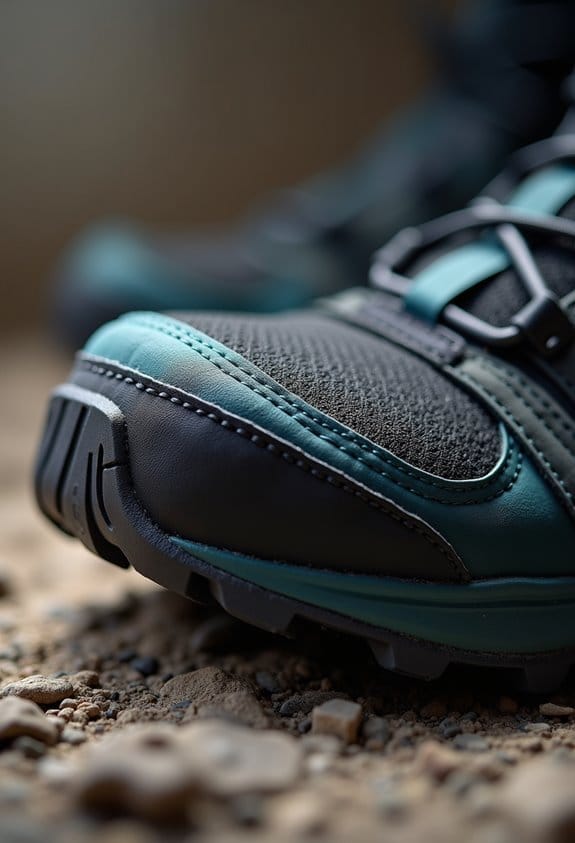
Foot and ankle protection is a crucial aspect of trail shoe design, especially for beginners encountering unpredictable terrain. Trail running shoes typically include reinforced toe caps that shield feet from rocks and roots, while structured ankle collars provide stability essential for preventing sprains on rough trails. Foot and ankle protection features also consist of cushioned midsoles capable of absorbing up to 30% of impact shock, safeguarding joints from hard surfaces. Protective overlays applied strategically enhance durability and reduce abrasions or punctures. Additionally, a snug fit combined with an ergonomic design limits foot movement inside the shoe, decreasing injury risk. These protective components work together to make certain the foot remains secure and supported, making them critical elements to contemplate when selecting trail shoes for novice runners traversing uneven ground. Shoes like the Kricely Mens Trail Running and Hiking Sneakers demonstrate the importance of a durable rubber sole with aggressive grip to increase stability and prevent slips on various surfaces.
Understanding Lug Pattern Design
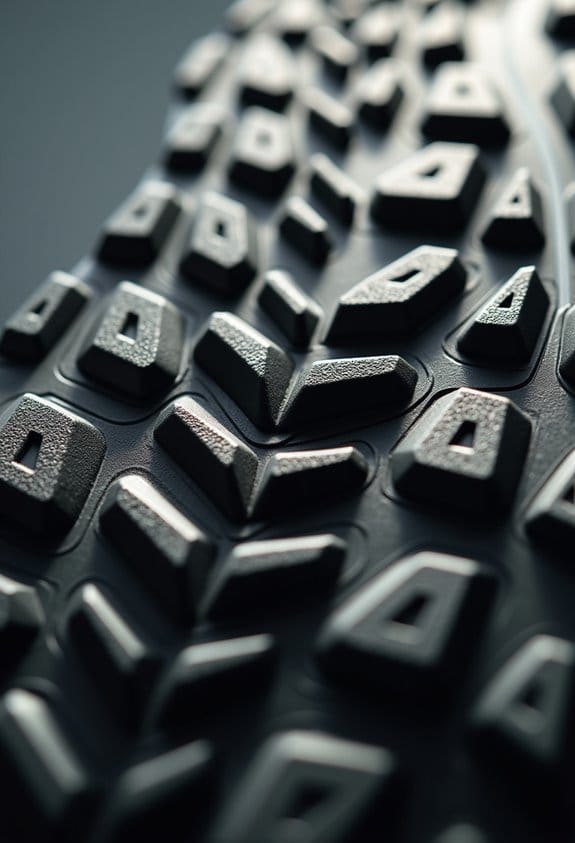
Protection features keep the foot stable and safe; traction factors complete the shoe’s performance profile. Lug patterns provide vital grip on various trail surfaces, with deeper and more varied lugs increasing traction on uneven terrain such as mud and gravel. Widely spaced lug patterns, usually with gaps larger than 5 mm, prevent mud buildup, maintaining traction in wet conditions. Conversely, smaller, denser lug patterns—spacing under 3 mm—improve friction on rocky trails, enhancing balance and reducing slips. Choosing lug patterns tailored to typical trail environments is essential because inappropriate designs can reduce stability and performance. Overall, lug patterns greatly influence safety and efficiency by adapting shoe traction to environmental demands, helping you maintain control and confidence across different trail conditions. Different Lug patterns also interact with the rubber outsole material to optimize grip and durability for specific terrains.
Benefits of Lightweight Trail Shoes
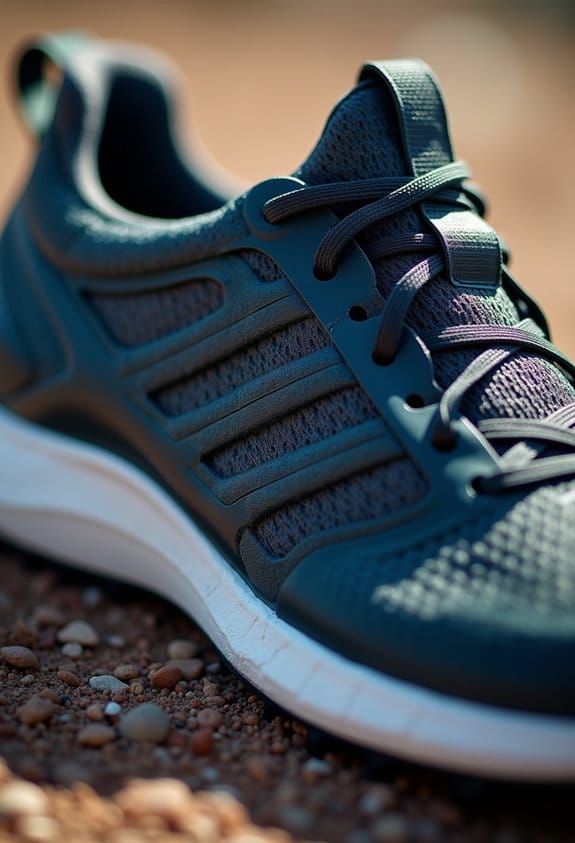
Although many trail shoes prioritize durability and support, lightweight trail shoes offer distinct advantages that benefit beginner runners in multiple ways. These shoes typically weigh between 6 to 10 ounces, reducing fatigue and enhancing speed over longer distances. The lighter weight permits more natural foot movement, which supports better running form and lowers injury risk. Many lightweight trail shoes use breathable materials that improve ventilation and moisture management, essential in varying weather conditions. Their minimalist cushioning allows a more responsive ground feel, helping new runners develop balance and proprioception on uneven terrain. Additionally, lightweight trail shoes feature flexible construction, promoting adaptability across multiple trail surfaces. This flexibility enables beginners to navigate diverse environments comfortably while building confidence and control early in their trail running experience. Innovative cushioning technologies such as the DynaSoft midsole in New Balance shoes combine responsiveness with comfort, making them ideal for those starting on trails.
Adaptability to Muddy Trail Conditions

Lightweight trail shoes excel on dry, firm surfaces, but muddy conditions require different design features to maintain stability and traction. Trail running shoes intended for muddy trails have widely spaced lugs to stop mud from clogging tread grooves, which improves traction on slippery surfaces. Deeper, aggressive tread patterns help disperse mud effectively, increasing stability and reducing slip risk on wet terrain. Many models use specialized rubber compounds for durable outsoles that maintain grip when wet. Cleaning these shoes regularly prevents mud buildup, which diminishes traction over time. When choosing trail running shoes for muddy conditions, focus on outsole depth around 5-6 millimeters and spaced lugs about 4-6 millimeters apart, as these parameters balance grip and mud shedding efficiently. Such specifications enhance safety and control during trail runs in challenging, muddy environments. Additionally, features like a TrailTack Green rubber outsole contribute to reliable grip on slippery and rugged surfaces.
Grip Optimization for Rocky Terrain
Grip optimization is critical when traversing rocky terrain, where uneven surfaces demand specialized shoe design to maintain balance and prevent injury. Trail shoes for rocky trails feature smaller, denser lug patterns that provide enhanced friction and grip on irregular surfaces. The outsoles use rubber compounds engineered specifically for superior traction on rocks, which improves stability while running. Many designs include multidirectional lugs that distribute weight efficiently and boost traction on varying rock shapes. Shoes with hard-wearing outsole materials maintain grip performance longer compared to standard running shoes, which can wear down quickly. Effective grip optimization helps prevent slips and falls, which are common causes of injury for beginner trail runners maneuvering rocky paths. Selecting footwear with these features guarantees safer, more confident running on challenging rocky terrain. Additionally, carbon rubber lugs are often incorporated to enhance grip and durability on rugged surfaces.
Role of Durable Upper Materials
Durable upper materials are essential components in trail running shoes, designed to protect the foot against abrasions from sharp rocks and branches. These materials often include synthetic mesh or ripstop nylon, which resist tears and wear in rugged environments. Additionally, breathable upper materials enable sweat to escape, aiding moisture management crucial for long-distance comfort. Many shoes incorporate reinforced toe caps made from rubber or plastic, providing impact protection and extending shoe life. A secure fit, usually achieved through adjustable lacing systems, minimizes foot movement and lessens injury risk on uneven trails. Waterproof options, such as GORE-TEX, guard against wet conditions but may reduce breathability during intense efforts. Overall, durable upper materials balance protection, comfort, and durability to suit varied trail demands. Notable models often feature breathable mesh uppers that enhance airflow while maintaining stability on challenging terrains.
Impact of Shoe Weight on Running Efficiency
Reducing shoe weight directly influences running efficiency by lowering energy costs with every stride, which can improve pace and decrease fatigue. Studies show that every 100 grams of extra shoe weight increases oxygen consumption by about 1%, which can reduce performance on long runs. Trail running shoes are designed to balance lightness and protection, typically weighing between 250 and 350 grams. Lighter shoes offer greater agility on uneven terrain, an important factor for beginner trail runners learning to adapt quickly. However, ideal weight varies per runner because heavier individuals may need more cushioning and stability, which can increase shoe mass without greatly compromising efficiency. Consequently, shoes are designed to combine lightweight materials with sufficient support, ensuring that speed improvements do not come at the cost of protection or injury risk on rough trails. Additionally, many modern trail running shoes incorporate durable mesh materials to enhance abrasion resistance while maintaining a lightweight construction.
Waterproof and Breathable Technologies
Trail running shoes frequently incorporate waterproof and breathable technologies to manage moisture and temperature effectively. Waterproof technologies like FUTURELIGHT™ create a barrier against water infiltration while maintaining ventilation, ensuring feet stay dry without overheating. Breathable materials allow sweat vapor to escape during exertion, reducing moisture buildup inside the shoe. Combining waterproof and breathable features helps maintain dry, comfortable feet, which can prevent blisters and improve overall performance. Advanced membrane technologies achieve this balance by providing lightweight protection against wet conditions without sacrificing air circulation. For beginner trail runners, shoes with these technologies support navigation across diverse weather patterns and unpredictable terrains, enabling consistent comfort. Selecting shoes equipped with proper waterproof and breathable technologies reduces the likelihood of discomfort caused by wetness, while promoting durability and effective temperature regulation throughout trail running activities. Many models also feature engineered mesh uppers that optimize air circulation and moisture management, further enhancing breathability and comfort on the trails.
Significance of Fit and Comfort in Trail Shoes
Proper fit and comfort are critical to successful trail running shoe performance and injury prevention. A trail shoe should fit snugly without causing tightness, allowing about a thumbnail’s length of space in the toe box to accommodate foot swelling during longer runs. Comfort is largely enhanced by cushioning in the midsole, which absorbs impact and supports uneven terrain navigation. Stability is another factor of fit; shoes must prevent excessive foot movement to reduce injury risks on rugged trails. Different brands vary in sizing standards, meaning trying on shoes in-store is essential to achieve ideal comfort. Inadequate fit can lead to blisters and discomfort, while properly fitted shoes guarantee a more stable and comfortable trail run experience. Some models, like the Saucony Women’s Excursion TR13, incorporate a supportive mid-top design to improve ankle stability without sacrificing flexibility.
Gender-Specific Trail Shoe Considerations
Although trail running shoes share many core features, gender-specific designs account for anatomical and biomechanical differences between male and female feet, which affect fit and performance. Gender-specific trail shoe considerations address variations in muscle mass, weight distribution, and foot shape. Women’s models typically have a narrower heel and a roomier toe box, reducing blisters and toe discomfort during runs. Men’s shoes usually include extra cushioning to accommodate heavier weights and provide additional stability on rugged terrain. Materials are selected for ideal flexibility, matching gender-specific foot biomechanics to enhance support. Choosing the correct gender-specific shoe improves comfort and lowers injury risk caused by improper fit and insufficient support. These factors are essential for beginner trail runners who seek better performance and injury prevention.
When to Choose Trail Shoes for Mixed Surfaces
When your running route includes both rugged trails and paved roads, selecting shoes designed for mixed surfaces becomes critical. Trail shoes for mixed surfaces combine rugged and smooth features, offering versatility across uneven terrain and asphalt. They typically have varied lug patterns: deeper lugs (4–6 mm) for trail grip and shallower ones (2–3 mm) for road traction. A flexible midsole, often constructed from EVA foam with 20–30% more elasticity, supports comfort during shifts between surfaces. Breathable fabrics, such as engineered mesh, manage moisture and temperature effectively while maintaining foot protection. Choosing trail shoes tailored for mixed surfaces enhances performance reliability, reduces injury risk due to sudden terrain changes, and builds confidence in new trail runners by maintaining stable footing in disparate conditions encountered on mixed routes.
Frequently Asked Questions
What Are the Best Trail Running Shoes for Beginners?
Like a steadfast companion on rocky paths, shoe recommendations for beginners include models with VECTIV™ technology and FUTURELIGHT™ materials. These shoes balance grip, comfort, and weather resistance, providing reliable support for those new to trail running.
What Features Make a Good Trail Runner?
A good trail runner incorporates heel cushioning for shock absorption, durable soles with varied lug patterns for traction, stability-enhancing technology, and effective foot protection. These features guarantee comfort, grip, and injury prevention on diverse terrains.
What Do I Need to Start Trail Running?
To start trail running, one needs appropriate footwear, hydration supplies, and knowledge of terrain types. Beginners should select manageable trails, use online resources to explore routes, and consider joining groups for guidance and motivation.
What Are the Features of Trail Running Shoes?
Trail running shoes act as a fortress for the foot, combining exceptional shoe durability with shock-absorbent soles, gripping lug patterns, protective designs, and advanced technologies to conquer rugged terrains while ensuring stability, comfort, and resilience on every step.


