As an Amazon Associate, we earn from qualifying purchases. Some links on this site are affiliate links at no extra cost to you. Our recommendations are based on thorough research and editorial judgment.


Key Features That Make a Shoe Suitable for Short‑Distance Sprinting

Sprint shoes must be lightweight, ideally under six ounces, to reduce the energy needed for rapid acceleration. They require a secure, tight fit with adjustable lacing to prevent foot movement and improve stability. Traction relies on well-engineered spike plates made from carbon fiber or PEBAX for grip and propulsion. Cushioning should absorb impact without adding bulk, balancing responsiveness and injury prevention. Flexibility in the forefoot and a low drop height of 0–5 mm encourage efficient foot strikes. Additional insights follow.
Key Takeaways
- Lightweight construction under 6 ounces enhances rapid acceleration and reduces race times through faster foot turnover and minimal ground contact.
- Tight, adjustable fit ensures stability, prevents foot movement, and reduces injury risk during explosive sprinting efforts.
- Advanced spike plate technology provides superior traction, energy-efficient force transfer, and discipline-specific grip for maximum sprinting speed.
- Minimal yet effective cushioning absorbs impact forces while maintaining close ground contact for responsiveness and fatigue reduction.
- Flexible forefoot design with a low drop height encourages quick propulsion and optimal midfoot or forefoot striking mechanics.
Why Lightweight Design Boosts Sprint Performance
You may be interested

10 Best Carbon Fiber Sprint Shoes for Explosive Speed in 2026
January 23, 2026


10 Best CrossFit Shoes of 2026 - In-Depth Reviews and Top Picks
January 23, 2026
Because sprinting demands rapid acceleration and precise footwork, a lightweight shoe design can improve performance by reducing the energy required to propel the leg forward. Shoes weighing less than 6 ounces decrease the mass sprinters must accelerate, enhancing sprint performance noticeably. This lightweight design supports faster foot turnover and minimizes ground contact time, essential factors for speed in short-distance races. Lightweight sprinting shoes often feature minimal cushioning, which allows enhanced ground contact and better feedback, enabling sprinters to adjust quickly to track surfaces. These improvements contribute to reduced race times, often by several tenths of a second, which is significant in competition. By lowering shoe weight and optimizing ground interaction, athletes gain a mechanical advantage during explosive starts and rapid strides. Additionally, the inclusion of carbon fiber plates in sprint shoes aids in propulsion and power transfer, further boosting sprinting efficiency.
The Role of Fit and Support in Sprinting Shoes

While lightweight materials improve speed, the fit and support of sprinting shoes are equally critical for maintaining stability during rapid movements. A tight fit prevents foot movement that can cause instability or injury at high speeds. Support features, such as adjustable lacing systems, allow for a customized fit that enhances both performance and comfort. Proper fit considers foot width and length, leaving about a thumb’s width space from the longest toe to the shoe end to accommodate swelling during activity. The upper must secure the foot firmly while ensuring breathability, which prevents excessive heat buildup. Additionally, the sole design contributes to stability by incorporating a stiff plate that minimizes flexibility, promoting efficient energy transfer and consistent stride performance throughout short-distance sprints. The use of a midfoot band further improves fit and stability by preventing slippage during explosive sprints.
Traction and Spike Plate Technology Explained

Traction plays a fundamental role in sprinting shoes by enabling powerful starts and maximizing acceleration from the blocks. Spike plate technology incorporates metal or ceramic spikes that deliver superior grip on track surfaces, minimizing slippage during sprints. Spike placement and length vary to match discipline needs and athlete preference, supporting performance on straightaways and curves. Lightweight spike plates use advanced materials to reduce energy loss, ensuring efficient force transfer with each step. These plates fit securely to the foot, maintaining necessary flexibility for rapid foot movements while maximizing traction. If spike plates fail to accommodate an athlete’s running style, performance and grip decline considerably. Properly engineered traction and spike plate technology combined promote ideal sprinting speed and stability throughout the race. The use of carbon fiber or PEBAX plates in spike plate design is crucial for enhancing propulsion and energy return.
Importance of Cushioning and Impact Absorption
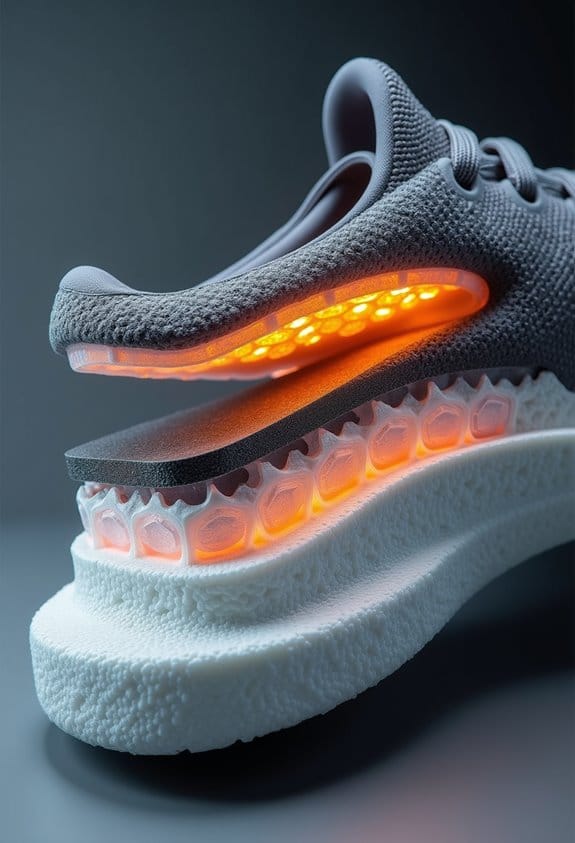
Cushioning and impact absorption are essential components in sprinting shoes that directly affect athlete safety and performance. Proper cushioning in athletic shoes helps absorb shock upon foot strike, reducing forces that can cause shin splints, joint pain, and other injuries. Short-distance sprinting shoes require minimal but effective cushioning that prevents injuries while maintaining close ground contact for responsiveness. Advanced midsoles use specialized foam materials to enhance energy return, allowing sprinters to maximize speed with each stride. Impact-absorbing features, such as gel inserts or air units, provide additional shock absorption to reduce fatigue during high-intensity efforts. However, excessive cushioning increases shoe weight, which can diminish acceleration, so balancing shock absorption with lightweight design is critical to promote both injury prevention and peak performance. Many sprint shoes incorporate EVA or Micro G foam in the midsole to provide optimal energy return and cushioning without adding unnecessary weight.
How Flexibility Influences Quick Foot Transitions
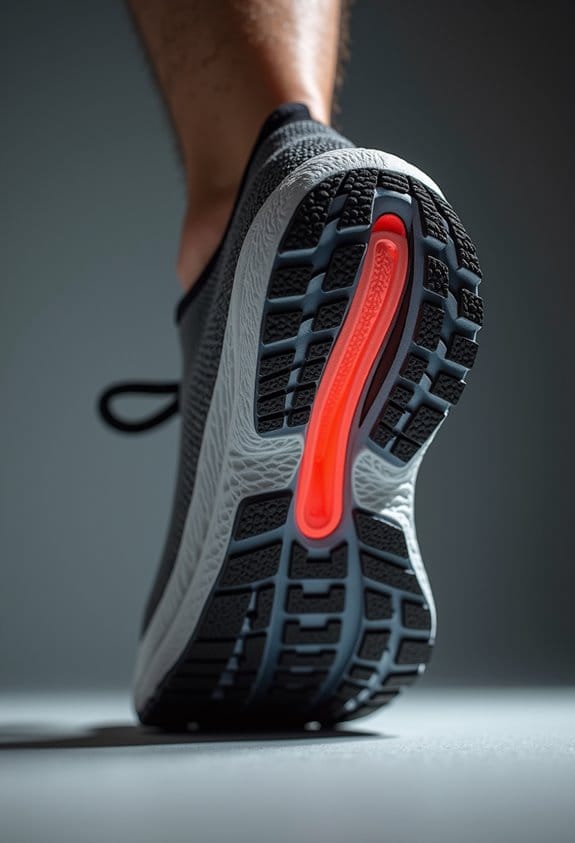
How does flexibility impact a sprinter’s ability to shift quickly between foot strikes? Flexibility in sprinting shoes allows rapid foot shifts, which are essential for maintaining peak speed during short bursts. Sprinting shoes designed with flexible forefoot regions enable quicker acceleration and propulsion by allowing the shoe to bend appropriately with each explosive push-off. This flexibility depends on the shoe’s materials and construction, which influence the shoe’s response to dynamic movements. Proper flexibility balances responsiveness and support; too much flexibility reduces stability, while too little hinders quick shifts. Enhanced flexibility reduces energy wasted during foot shifts, helping conserve strength and improve overall performance. Consequently, selecting sprinting shoes with appropriate flexibility guarantees a sprinter can efficiently manage quick changes without sacrificing control or support during short-distance sprints. Additionally, advanced sprint shoes incorporate carbon plate integration which enhances energy return and stability, complementing the benefits of flexibility for maximum acceleration.
Selecting the Right Drop Height for Efficient Running
Selecting the appropriate drop height is a key factor that influences running mechanics and efficiency in sprinting. Drop height measures the difference in millimeters between the heel and forefoot of a shoe and affects how your foot strikes the ground. For sprinting short distances, a lower drop height of 0-5mm usually improves performance by encouraging midfoot or forefoot striking, which reduces heel striking and minimizes ground contact time. Shoes with drops over 10mm often promote heel striking, which can slow acceleration. However, individual biomechanics matter; some runners may find higher drops offer better comfort or stability. Testing different drop heights during practice runs helps you find the ideal balance, ensuring your sprinting shoes enhance running mechanics, comfort, and overall performance without increasing injury risk. Additionally, features such as foam midsoles in sprint shoes provide crucial cushioning and shock absorption to reduce fatigue during sprints.
Frequently Asked Questions
What Are the Characteristics of a Good Running Shoe?
A good running shoe balances shoe flexibility and cushioning technology to enhance comfort and performance. Effective traction patterns improve grip, while ideal weight distribution and arch support guarantee stability, reducing injury risk during varied running activities.
What Are the Best Running Shoes for Short Distances?
The best running shoes for short distances ironically resemble feathered rockets, boasting top brands, precise shoe sizes, minimal cushioning levels, and grip technology designed for unforgiving track surfaces—perfect for those who demand traction over cloud-like comfort.
What Are the Key Features of Nike Shoes?
Nike shoe technology incorporates advanced materials enhancing performance and comfort. Nike shoe design prioritizes lightweight construction and secure fit. Nike shoe materials guarantee durability, while Nike shoe comfort supports stability, collectively maximizing Nike shoe performance for athletes.
What’s the Difference Between Short and Long Distance Track Shoes?
Like a sprinter’s burst versus a marathon’s steady rhythm, short-distance sprint spikes prioritize low cushioning level, lighter weight differences, and acceleration focus on track surfaces, while long-distance shoes emphasize comfort and endurance over time.


