As an Amazon Associate, we earn from qualifying purchases. Some links on this site are affiliate links at no extra cost to you. Our recommendations are based on thorough research and editorial judgment.


Minimalist vs. Maximalist Running Shoes: Understanding the Two Extremes

Minimalist running shoes have a low or zero heel-to-toe drop and minimal cushioning, promoting midfoot strikes and natural foot flexibility that strengthens muscles. Maximalist shoes offer thick cushioning with drops from 2 to 6 millimeters, enhancing shock absorption and stability but potentially encouraging heel strikes that increase injury risk. Alternating between these extremes can diversify stress loads and support injury prevention. To effectively choose, consider biomechanics, running style, and proper adjustment strategies before exploring detailed differences.
Key Takeaways
- Minimalist shoes have low drop and minimal cushioning, promoting natural foot mechanics and midfoot striking for stronger foot muscles.
- Maximalist shoes offer thick cushioning and moderate drop, focusing on shock absorption and stability to protect joints.
- Minimalist shoes reduce knee and hip strain, while maximalist shoes may encourage heel striking, increasing certain injury risks.
- Gradual transition to minimalist shoes with limited mileage and targeted exercises prevents injury during adaptation.
- Rotating between minimalist and maximalist shoes decreases injury risk by balancing cushioning, support, and diverse loading patterns.
Defining Minimalist and Maximalist Running Shoes
You may be interested


10 Best Reflective Road Running Shoes for Safety and Performance
November 26, 2025

Running shoes can be divided mainly into two categories: minimalist and maximalist. Minimalist running shoes have low or zero drop designs and minimal cushioning, promoting natural running by encouraging a midfoot strike that strengthens foot muscle and lower leg. They allow greater foot flexibility, potentially reducing knee and hip strain. Maximalist running shoes, pioneered by Hoka, feature thick cushioning with heel-to-toe drops ranging from 2 to 6 millimeters. This design provides enhanced shock absorption and stability while maintaining a lightweight feel, which can alleviate forefoot discomfort such as metatarsalgia. Injury prevention depends on matching shoe type to individual biomechanics, running style, and foot condition. Combining minimalist and maximalist shoes helps runners adapt to different surfaces and balances cushioning with natural foot function to mitigate injury risks. Many minimalist options also emphasize a wide toe box to improve comfort and natural foot alignment during runs.
Historical Perspective and Evolution of Running Footwear

The evolution of footwear designed for locomotion spans from ancient barefoot practices to sophisticated modern technologies. Historical figures like Abebe Bikila and Zola Budd exemplify barefoot running, which emphasizes natural foot biomechanics and minimal interference. In the early 21st century, minimalist shoes emerged, offering low cushioning and minimal drop to mimic barefoot conditions, supporting foot health and natural movement. Conversely, maximalist shoes, popularized by brands like Hoka, provide thick cushioning and enhanced stability, targeting running efficiency through shock absorption. These evolving footwear choices reflect an increasing awareness of biomechanics and individual needs. Understanding the historical context and progression of running shoes helps clarify the ongoing debate between minimalist and maximalist designs, which remains grounded in optimizing foot health, comfort, and performance based on personal foot condition and injury history. Zero drop shoes, with their natural toe splay and posture-enhancing design, are a key element in minimalist footwear promoting proper alignment and comfort.
Biomechanical Impacts and Injury Considerations

Footwear choice directly affects lower limb biomechanics and injury risk during locomotion. Minimalist shoes promote midfoot striking, which smoothens ground reaction forces and reduces knee and hip strain, consequently lowering impact forces compared to heel striking. Maximalist shoes offer extensive cushioning but may encourage aggressive heel strikes, increasing injury risks such as stress fractures due to higher loading rates. Biomechanics change markedly with each shoe type, influencing foot strengthening and running mechanics. Minimalist shoes often require careful adaptation since improper shift raises risks of tendonitis and plantar plate tears. Alternating between minimalist and maximalist shoes can diversify stress patterns and decrease overuse injuries. Understanding these biomechanical impacts helps manage injury risks and optimize foot performance for your individual running style and needs. Additionally, selecting footwear with features like a wide toe box and zero-drop sole can promote natural foot alignment and further support injury prevention.
Transition Strategies for Minimalist Footwear
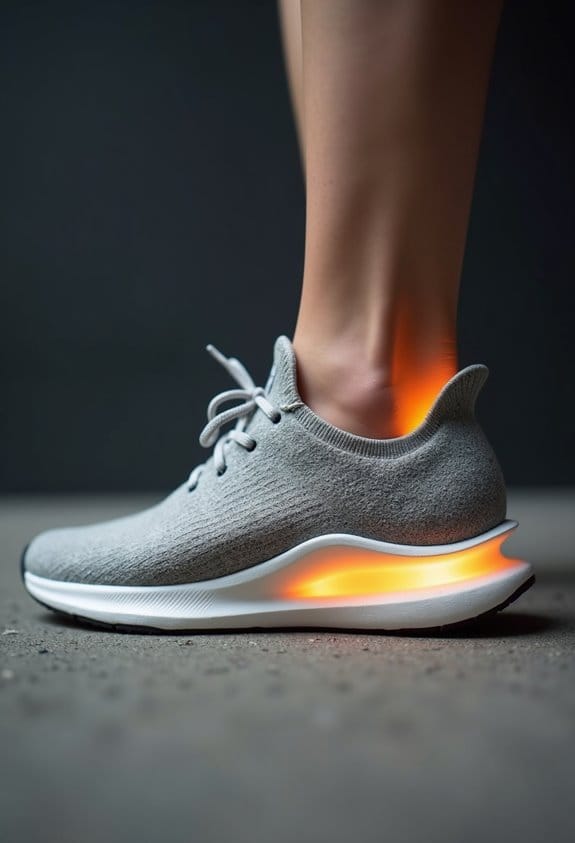
Begin shifting to minimalist footwear by limiting use to 5% of your total weekly mileage to reduce injury risk. For example, if you run 20 miles weekly, start with 1 mile in minimalist shoes. This gradual adaptation helps minimize injury risks and allows your body to adjust to the new shoe type. During this changeover, strengthen foot muscles with targeted exercises to improve resilience against strain. Avoid running in minimalist footwear on consecutive days to prevent excessive fatigue and potential injuries. Throughout the process, monitor pain carefully and adjust your mileage or shoe type based on comfort and biomechanics. This methodical alteration supports a safer adaptation to minimalist footwear by balancing mileage increases with required foot muscle strengthening and ongoing pain assessment. It is also essential to consider the wide toe box design in minimalist shoes to ensure natural toe splay and reduce pressure during your transition.
The Role of Shoe Rotation in Injury Prevention
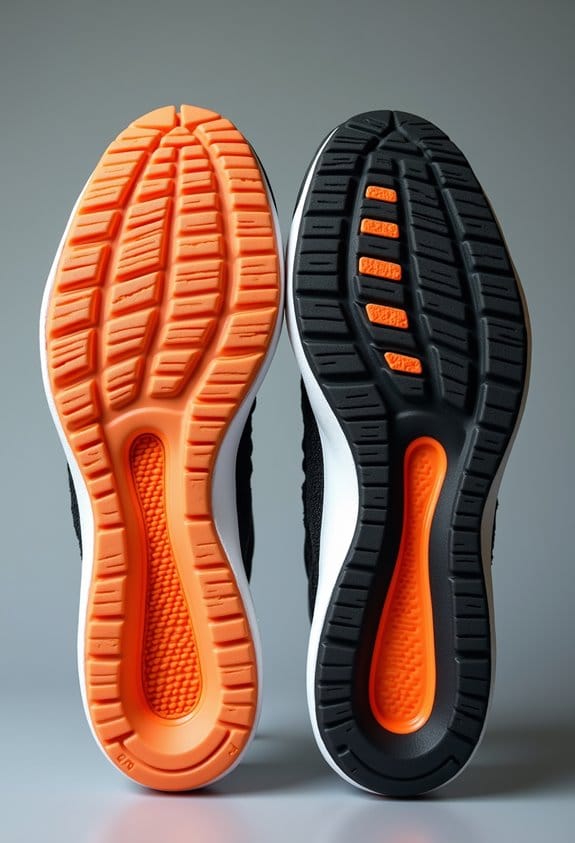
Although varying shoe types may require careful planning, rotating running shoes effectively reduces injury risk by approximately 39%, according to research studies. Shoe rotation involves alternating between different types of running shoes, such as minimalist and maximalist models, to balance cushioning and support. Maximalism offers enhanced shock absorption, ideal for long runs and recovery days, while minimalism strengthens the foot during shorter sessions. Using multiple running shoes allows you to distribute repetitive loading patterns, which minimizes the stress on specific muscles and joints. Incorporating 1-2 minimalist runs per week alongside maximalist or neutral footwear promotes foot and ankle strength without overwhelming any single structure. This approach adapts better to varying terrains and physical demands, ultimately improving injury prevention through diversified biomechanical loading. Additionally, choosing shoes with a wide toe box can improve balance and reduce foot injuries during running.
Personalizing Your Running Shoe Choice
Rotating between minimalist and maximalist shoes helps manage biomechanical stress, but personal factors determine the best choice. Minimalist running shoes suit those with midfoot strikes and a natural running style, encouraging foot strength and flexibility. Maximalist shoes provide cushioning and support, preferred by heel-to-toe runners or individuals requiring extra shock absorption. Foot shape influences fit and comfort, so podiatrist consultation aids in matching shoes to gait and biomechanics, reducing injury risk. Shifting to minimalist shoes should start at 5% of weekly mileage to allow muscle adaptation, minimizing strain. Choose maximalist shoes for hard surfaces and low leg discomfort; use minimalist for trail runs or when knee pain prompts midfoot strike promotion. Injury history and running style guide personalized shoe selection within these extremes. Additionally, incorporating a gradual transition period when switching to minimalist shoes helps prevent injuries and enhances adaptation.
Frequently Asked Questions
What Is the Difference Between Minimalist and Maximalist Running Shoes?
Minimalist shoes emphasize weight reduction and natural foot support with minimal shoe cushioning, enhancing running efficiency and terrain adaptability. Maximalist shoes offer increased shoe cushioning and arch stability, prioritizing injury prevention and comfort, influenced by style preference.
Who Should Not Wear Minimalist Shoes?
Those embracing a cautious path may avoid minimalist shoes, as certain foot shapes, insufficient arch support, or unfamiliar running styles increase injury risks. Prolonged adaptation periods, reliance on heel counters, terrain preference, and comfort level also guide such decisions.
What Do Podiatrists Say About Zero Drop Shoes?
Podiatrists highlight zero drop benefits in promoting natural foot biomechanics and injury prevention but stress gradual shift tips. They caution on limited shoe cushioning and arch support, recommending evaluation of personal preferences and surface adaptability before adoption.
What’s the Difference Between a Maximalist and a Minimalist?
Minimalist shoes emphasize reduced cushioning, promote natural running form, adapt well to varied terrain, and support foot strength; maximalist shoes prioritize thick cushioning, comfort levels, reduce impact-related foot injuries, incorporate advanced shoe technology, with brand comparisons shaping personal preference.


