As an Amazon Associate, we earn from qualifying purchases. Some links on this site are affiliate links at no extra cost to you. Our recommendations are based on thorough research and editorial judgment.


Outdoor Hiking Boots vs. Military‑Style Tactical Boots for Rugged Use

Outdoor hiking boots use lightweight materials like leather and nylon, offering flexibility and cushioning ideal for miles of varied terrain. They provide padded tongues, waterproof membranes, and midsoles that reduce fatigue and protect against moisture. Military-style tactical boots employ full-grain leather and reinforced toe caps, with structured collars enhancing ankle support and Vibram soles that resist wear and improve traction on urban and rugged grounds. They require longer break-in times because of added durability. Exploring specific boot features reveals suitable applications for both types.
Key Takeaways
- Hiking boots prioritize lightweight materials and comfort for long-distance trails, while tactical boots emphasize durability and rugged construction.
- Tactical boots use full-grain leather and high-strength nylon for enhanced protection and wear resistance.
- Tactical boots provide superior ankle support and reinforced toe caps for impact and puncture protection.
- Hiking boots feature breathable, waterproof membranes and shock-absorbing midsoles to reduce fatigue on natural terrain.
- Tactical boots are designed for urban and rugged operations with Vibram soles offering excellent grip on slippery surfaces.
Hiking Boots Overview
You may be interested
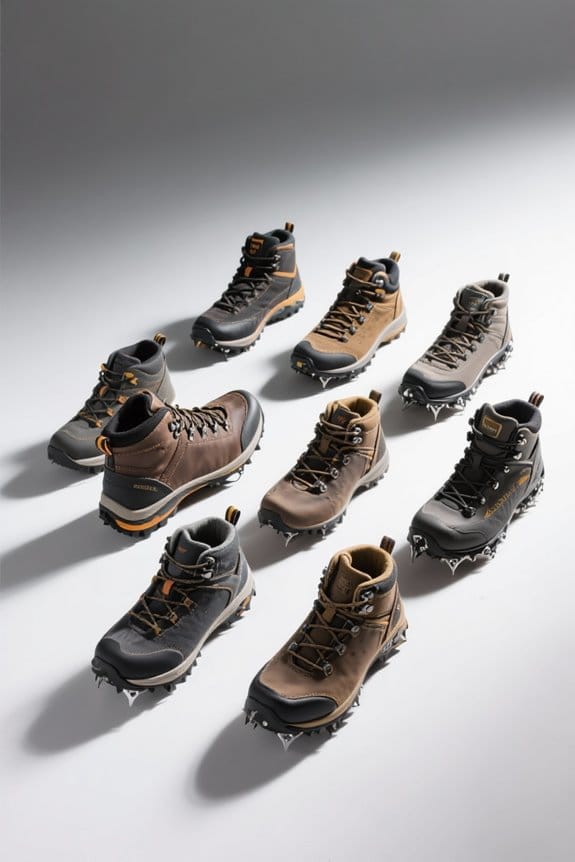
10 Best Crampon-Compatible Hiking Boots for Your Next Adventure
December 1, 2025
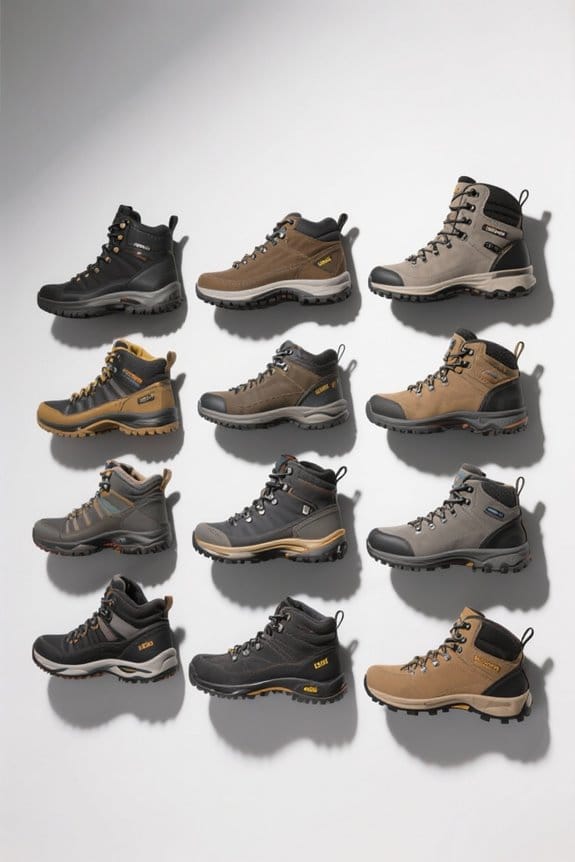
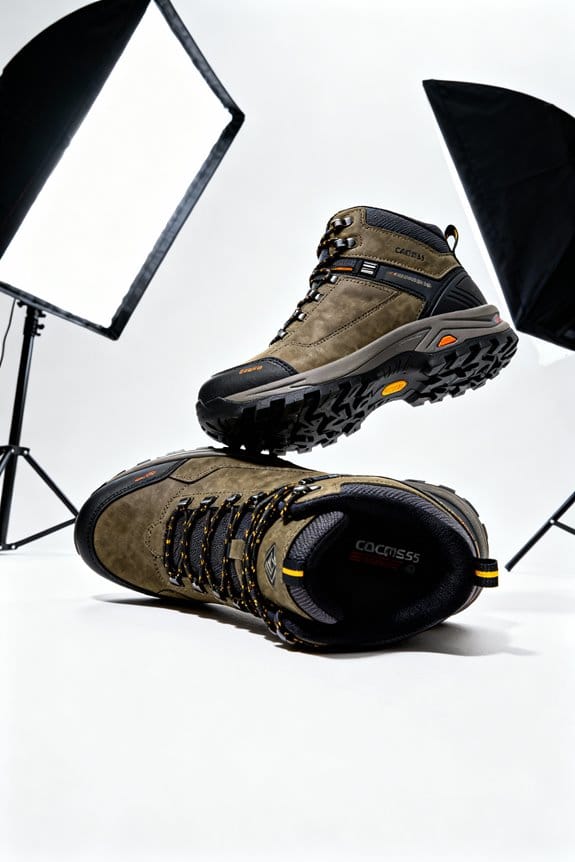
Hiking boots provide essential support and cushioning for outdoor trails. Designed for rough terrain, they offer stability and slip resistance through outsoles with heel breaks. Hiking boots vary in height; low-cut models emphasize comfort for short hikes, while mid- to high-cut options enhance ankle support during longer excursions. Unlike tactical boots that prioritize durability under combat conditions, hiking boots focus on flexibility and comfort using lightweight materials like leather, nylon, or suede. These materials reduce overall weight without compromising protection, making them suitable for recreational use. Stability on uneven surfaces is critical, and hiking boots address this without undermining flexibility. When selecting hiking boots, wearing merino wool or trail socks guarantees a proper fit by accounting for foot swelling during extended hikes, improving performance and comfort. Additionally, choosing boots with waterproof and breathable features ensures feet stay dry and comfortable in varying weather conditions.
Recommended Products

Comfortableness: NORTIV 8 Men's Waterproof Hiking Boots certainly delivers on all-day comfort! Removable and shock-absorbent cushioned insoles offer the support for your feet.

OMNI-TECH: For prolonged exposure to moderate rain and snow. Multilayered, waterproof, seam-sealed construction that allows the inside to breathe, keeping feet dry and comfortable no matter the conditions.

Excellent Comfort: Nortiv 8 women's waterproof hiking boots use our lightweight, durable midsole, and advanced traction rubber soles, which can be slip-resistant on rugged ground. If you prefer a looser fit, consider choosing the wide toe box version.
Essential Features of Hiking Boots

Footwear engineered for trail use must balance stability, traction, and comfort to support extended outdoor activity. Hiking boots provide stability through a secure fit around the ankle, which reduces the risk of twisting injuries during uneven terrain navigation. Their soles feature a defined heel break that guarantees reliable grip on descents, while thicker soles absorb shock effectively. Comfort derives from padded tongues that prevent pressure points from laces during long hikes and materials like leather or nylon enhancing breathability. Weather resistance is achieved via treated surfaces that repel water yet allow moisture vapor to escape, limiting blisters. Durability involves mid to high-cut designs that withstand rough trail conditions and heavy backpacks. Lightweight models prioritize breathability and comfort for casual hikes, balancing necessary performance attributes with user needs. Additionally, technologies such as Gore-Tex membranes ensure waterproof protection while maintaining breathability for all-day comfort.
Recommended Products

ADVANCED TECHNOLOGY: The Newton Ridge Plus Waterproof Amped Hiking Boot features a seam-sealed construction, combined with our TECHLITE lightweight midsole, for long-lasting comfort with superior cushioning and high energy return.

OMNI-TECH: For prolonged exposure to moderate rain and snow. Multilayered, waterproof, seam-sealed construction that allows the inside to breathe, keeping feet dry and comfortable no matter the conditions.

ADVANCED TECHNOLOGY: Columbia Men's Newton Ridge Plus II Waterproof Hiking Boot features our lightweight, durable midsole for long lasting comfort, superior cushioning, and high energy return as well as an advanced traction rubber sole for slip-free movement on rough ground.
Tactical Boots Overview

Tactical boots focus on durability, support, and functionality in challenging environments. They are constructed from durable materials like full-grain leather and high-strength nylon to withstand rugged use and harsh conditions. Tactical boots often feature waterproof membranes that maintain dryness during wet weather, ensuring comfort across diverse climates. Reinforced toe caps protect against impact, while the priority on ankle support helps prevent injuries during intense physical activity. The use of Vibram soles enhances grip and traction, providing stability on slippery or uneven terrain. Additionally, tactical boots include features like a gusseted tongue to keep debris out. When comparing tactical and hiking boots, the former emphasizes protection and durability specifically for tactical scenarios, whereas hiking boots may prioritize comfort and flexibility in varied outdoor settings. Many hiking boots also incorporate waterproof membranes such as KEEN DRY or GORE-TEX to enhance water resistance while maintaining breathability.
Recommended Products

Under Armour’s mission is simple: to make you better.
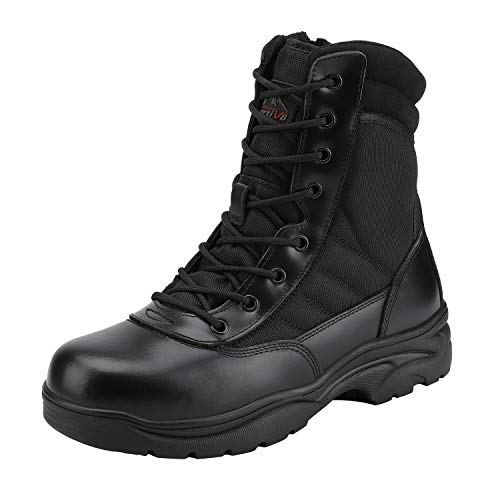
Protection & convenience: Ankle-high protection wraps & supports the ankles.The side zipper with hook-loop strap closure is easy to take on/off.

Light & breathable textile upper with full-grain, polishable leather forefoot for durable protection
Key Characteristics of Tactical Boots

Because durability and protection are essential in demanding environments, tactical boots incorporate several key features designed for longevity and safety. Tactical boots use durable materials such as full-grain leather and high-strength nylon to resist wear and tear. They often contain waterproof membranes, which keep feet dry while allowing air circulation through breathable mesh panels. Reinforced toe caps protect against impacts and punctures. For support, these boots provide ankle stability through structured collars and padding. The soles, commonly Vibram, deliver superior traction and slip resistance on uneven or wet surfaces. Gusseted tongues prevent dirt and debris from entering the boot, maintaining comfort and hygiene during extended use. Each characteristic contributes to tactical boots’ functionality in rugged conditions, making them reliable for users facing challenging terrain and variable weather. Additionally, breathable mesh uppers enhance comfort by keeping feet cool and dry during prolonged wear.
Comparative Analysis: Tactical Boots vs. Hiking Boots

Users seeking durable and supportive boots must weigh differences between tactical and hiking designs. Tactical boots use durable materials, such as full-grain leather and high-strength nylon, providing a firm structure, while hiking boots favor lighter materials like leather and suede, improving comfort and flexibility. Tactical boots offer higher ankle support with stiff construction, requiring a longer break-in period, which suits off-trail or heavy-load activities; hiking boots are lower cut, more flexible, and break in quicker, ideal for extended trail distances. Both provide water resistance, though tactical boots use waterproof membranes for extreme conditions, and hiking boots balance water resistance with breathability. For grip, tactical boots feature Vibram soles delivering superior grip across urban and rugged terrains, contrasting hiking boots’ heel break outsoles designed to enhance traction on natural trails. Additionally, hiking boots often incorporate a lightweight midsole that reduces fatigue and enhances comfort over long distances.
Recommended Products
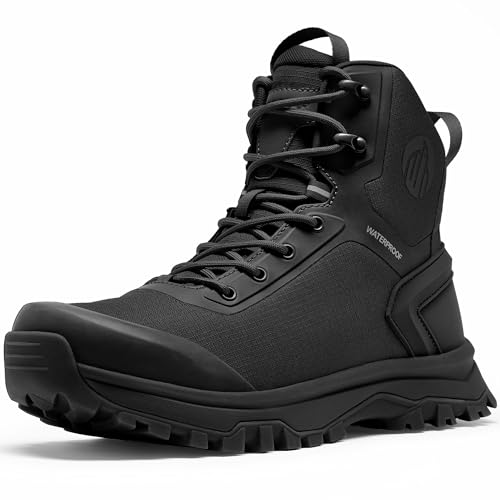
Waterproof & Comfortabla: The tactical boots for men have waterproof uppers, seamless construction, the mesh materials are breathable while offering good repelling of falling water (not submersible obviously). they're very comfortable and have modern tactical design.

DURABLE & PROTECTIVE - This mens hiking boots upper made of suede leather with 1000D Cordura fabric, which is durable and scratch-resistant. EVA midsole, lightweight and flexible, supply excellent cushioning for work or hiking. All terrain outsole, great grip with geometrical pattern design, non-slip work boots for men. Strengthened toe cap and heel provide full protection, anti-collision and ankle support. Suit for tactical, military, combat, hunting, motorcycle, airsoft boots

Advanced Cushioning: Move confidently with enhanced shock absorption and stand comfortably, thanks to the responsive EVA midsole. Additionally, experience continuous dryness, ensured by the breathable mesh lining and footbed.
Ideal Use Cases for Tactical Boots in Hiking
When hiking across uneven or rocky terrain, boots with reinforced ankle support reduce the risk of sprains and fatigue. Tactical boots are designed with a high-cut profile that provides superior ankle support, ideal for carrying heavy loads on rough trails. Their durable full-grain leather and high-strength nylon materials offer protection and support against abrasions and impacts. Equipped with Vibram soles, these boots provide excellent traction on slippery or unstable surfaces, improving stability during strenuous hikes. Waterproof membranes safeguard your feet from moisture, maintaining comfort and preventing blistering. Reinforced toe caps and gusseted tongues block debris, ensuring long-lasting protection. Tactical boots are suited for extended trekking through rough, wet conditions where durability, support, and reduced fatigue are essential for safety and performance. Additionally, the integration of Gore-Tex waterproof technology enhances comfort by keeping feet dry while allowing breathability during prolonged use.
Recommended Products

Durable leather and abrasion-resistant fabric upper, military class membrane waterproof and moisture-wicking mesh lining

Waterproof coated leather and mesh upper

DURABLE & PROTECTIVE - This mens hiking boots upper made of suede leather with 1000D Cordura fabric, which is durable and scratch-resistant. EVA midsole, lightweight and flexible, supply excellent cushioning for work or hiking. All terrain outsole, great grip with geometrical pattern design, non-slip work boots for men. Strengthened toe cap and heel provide full protection, anti-collision and ankle support. Suit for tactical, military, combat, hunting, motorcycle, airsoft boots
Maintenance and Care for Tactical and Hiking Boots
Although tactical and hiking boots are engineered for rugged conditions, their longevity depends on consistent maintenance and care routines. Begin by cleaning boots after each use, removing dirt with a brush and applying cleaners suited for the materials used, such as leather or synthetic fabrics, to preserve waterproofing treatments. Inspect soles regularly for tread wear; replace boots or soles when grip and stability decline, especially after 20-30% tread erosion. Store boots in a cool, dry place using boot trees or newspaper to prevent shape loss and moisture buildup. Apply waterproofing treatments every few months or after heavy wet exposure. During the break-in period, wear boots for short durations to increase comfort and reduce blisters, allowing materials to flex naturally without premature damage. Consistent maintenance extends functional performance on rugged terrain. Additionally, selecting boots with durable rubber soles can significantly enhance wear resistance and prolong service life.
Frequently Asked Questions
Are Military Boots Better Than Hiking Boots?
Military boots performance typically surpasses hiking boots comfort in durability, ankle support, and waterproof features. Tactical boots versatility favors rugged terrain adaptability, though boot weight comparison and price considerations often make hiking boots preferable for lighter, casual use scenarios.
Can Army Boots Be Used for Hiking?
Army boots can gracefully shift to hiking, offering sturdy ankle support and waterproof features. However, hiking comfort may wane due to boot weight and limited flexibility, while breathability factors and insoles comfort vary, affecting overall terrain suitability.
Which Boots Do Navy SEALS Use?
Navy SEAL footwear emphasizes tactical boot features such as water resistance, superior boot comfort levels, and breathability factors. SEAL training requirements demand lightweight, versatile boots balancing weight considerations for agility and protection, optimizing performance in diverse environments.
Are Military Boots Durable?
Military boots are highly durable due to premium military boot materials, advanced sole traction technology, effective waterproof features, and engineered weight distribution systems. They offer superior rugged terrain performance, enhanced ankle support, improved boot comfort levels, and extended lifespan expectations.